Iran's Domestic and Foreign Policy
Between Ideology and Regional Interests
ABDULKAREEM MURTADHA
Chapter One
The emergence of the Islamic Republic of Iran
First: The historical and political background before the revolution
Before 1979, Iran was known as the Kingdom of Iran , and had been ruled by the Pahlavi dynasty since 1925, when Reza Shah Pahlavi established the modern state after the fall of the Qajar dynasty.
His son, Mohammad Reza Pahlavi (known as the Shah), inherited it in 1941 after Britain and the Soviet Union intervened in World War II.
During the Shah's reign, Iran witnessed significant economic and industrial development, especially in the oil sector, but it also faced:
Extensive political despotism , with power concentrated in the hands of the Shah.
Heavy dependence on the West , especially the United States and Britain.
Marginalization of the religious establishment , and attempts to forcibly secularize society.
A stark class disparity between the wealthy elites and the poor classes.
The White Oil Revolution (1963) , a series of reforms undertaken by the Shah, also led to escalating tensions with the religious authority , especially after Ayatollah Ruhollah Khomeini opposed it and was arrested and subsequently exiled.
Second: The Roots of the Islamic Revolution (1963–1979)
The beginnings of the revolution began with the opposition of the clergy and intellectuals to the Shah's regime, and this opposition formed a unique blend of religious ideology and political and social rejection .
The most important factors that contributed to the outbreak of the revolution:
Political tyranny: banning parties, rigging elections, and the dominance of the security service (SAVAK), which was notorious for repression and torture.
Cultural Westernization: Western Modernization Policies Shocking Conservative Society.
Financial and administrative corruption: Despite oil wealth, a large percentage of Iranians remain in poverty.
Religious Symbolism: The Role of the Clergy, Led by Khomeini, in Mobilizing the Masses.
American support for the Shah: which made the regime viewed as an "agent of the West."
In 1978 , popular protests escalated in many cities and expanded to include the middle classes, workers, clerics, and students.
In January 1979 , the Shah left the country under pressure from demonstrations, while Khomeini returned from exile in Paris on February 1, 1979, to a huge popular reception.
Third: Declaration of the Islamic Republic (1979)
After the fall of the monarchy, Iran entered a transitional period.
On February 11, 1979 , the regime officially collapsed, and revolutionaries took control of state institutions.
On April 1, 1979 , a referendum was held in which the people were asked about the nature of the new regime, and the result was 98% in favor of establishing an "Islamic Republic . "
Khomeini then announced the establishment of the Islamic Republic of Iran , a state based on:
Popular sovereignty through elections,
The religious and political authority represented by the principle of the Guardianship of the Jurist , meaning that the supreme leadership is vested in a jurist who meets the religious and political qualifications.
Fourth: The New Constitution (1979)
The Constitution of the Islamic Republic was drafted by an elected Assembly of Experts and approved by referendum in December 1979.
The constitution is a combination of Islamic principles and popular democracy , and its most prominent features are:
Supreme Leader: The highest authority in the state, directing general policy and supervising the three branches of government.
President of the Republic: Popularly elected and heads the executive government.
Islamic Consultative Assembly: the elected legislative authority.
Guardian Council: reviews laws and ensures their compliance with Sharia and the Constitution.
Assembly of Experts: Selects the Supreme Leader and monitors his performance.
Fifth: The direct results of the establishment of the Islamic Republic
A comprehensive change in the structure of state and society: a transition from a secular monarchy to a theocratic religious system.
Nationalization of oil and major industries.
Reshaping foreign policy on the basis of "independence from East and West" and "supporting the oppressed."
The outbreak of the Iran-Iraq War (1980–1988) had an impact on the consolidation of the new regime.
Iran has become a center for political Islam movements in the world.
Sixth: The intellectual and political dimensions of the Islamic Republic
The system is based on the idea that absolute sovereignty belongs to God , and that the people exercise their authority under the supervision of Sharia .
The Guardianship of the Jurist is the fundamental theory formulated by Khomeini, which states that a just jurist must manage the affairs of the nation during the absence of the Imam Mahdi.
Thus, the republic combines religious legitimacy with popular legitimacy , in a unique model in the Islamic world.
The Islamic Republic of Iran emerged from a long interaction between religion, politics, and national identity. It was a revolution against tyranny and foreign domination , but it also launched a new model for the modern Islamic state.
This experience influenced the Islamic world politically and intellectually, and remains to this day the focus of debate about the balance between religion and democracy and popular and religious authority .
Chapter Two
The structure of the political system in the Islamic Republic of Iran
First: The general framework of the political system
The political system in Iran is an Islamic republic that combines popular sovereignty and religious authority , and is based on the 1979 Constitution (amended in 1989).
The theoretical basis of this system is the principle of the Guardianship of the Jurist (the religious-political leadership) proposed by Imam Ruhollah Khomeini , which stipulates that the supreme authority in the state must be in the hands of a qualified jurist who represents the supreme leader of the nation.
The system consists of three main branches : executive, legislative, and judicial, but they operate under the supervision of the Supreme Leader , who holds supreme powers.
The system structure can be divided into higher leadership institutions , government authorities , and regulatory and advisory bodies .
Second: The Supreme Leadership (the Supreme Leader of the Islamic Revolution)
1. Constitutional position:
The Supreme Leader (the Guardian Jurist) is the highest authority in the Islamic Republic, the head of the regime, and the arbitrator between the authorities.
Article (5) of the Constitution stipulates that the authority and leadership of the nation shall be in the hands of the just and pious jurist who is knowledgeable in matters of religion and politics.
2. Powers of the Supreme Leader (according to Articles 107-110):
Determining the general policies of the state after consulting with the Expediency Discernment Council.
Supervising the proper implementation of public policies.
Commander-in-Chief of the Armed Forces.
Declaration of war, peace and general mobilization.
Appoint or dismiss:
Head of the Judiciary,
Chairman of the Radio and Television Corporation,
Friday Imams,
Chief of Staff of the Army and Commanders of the Revolutionary Guards,
Members of the Guardian Council are jurists.
Approval of the election of the President of the Republic and his removal if necessary.
Resolving disputes between the three powers or regulating their relations.
3. His election and monitoring:
The Leader is selected by the Assembly of Experts (an elected council of religious scholars).
This council has the power to dismiss him if he is unable to perform his duties or loses the qualifications for leadership.
Third: The Assembly of Leadership Experts
1. Formation and tasks:
It consists of about 88 members of the clergy, popularly elected for 8-year terms.
Does:
Choosing the Supreme Leader,
Monitor his performance and powers,
Isolate him when necessary.
2. His constitutional status:
The Council is the guarantor of the continuity of the Islamic system according to the principle of the Guardianship of the Jurist, as it monitors the highest authority in the state.
Fourth: The Presidency of the Republic (the executive authority)
1. Constitutional position:
The President of the Republic is the highest executive authority after the Supreme Leader, and represents the people in the day-to-day management of state affairs.
2. Election and powers:
The President is elected directly by the people every four years , and may serve one additional term.
His powers include:
Implementation of the Constitution and public policies.
Appointment of ministers (with the approval of Parliament).
Signing international treaties (with the approval of the Shura Council).
Preparing the general budget.
Representing the country in international forums.
3. Oversight of the President:
The Guardian Council approves his candidacy.
Parliament can question him and withdraw confidence from ministers.
The Supreme Leader has the right to dismiss him if he violates the supreme interests of the state.
Fifth: The legislative authority
1. Islamic Consultative Assembly (Parliament):
It consists of about 290 representatives who are directly elected by the people for a four-year term.
His specializations:
Enacting laws and approving the budget.
Monitoring the work of the government.
Approval of international agreements and loans.
Withdraw confidence from ministers or the president.
2. Guardian Council:
It consists of 12 members :
6 jurists appointed by the Supreme Leader.
6 legal experts nominated by the Chief Justice and approved by Parliament.
Its main functions:
Review all laws issued by Parliament to ensure their compliance with Islamic Sharia and the Constitution .
Supervising elections (presidential, legislative, and Assembly of Experts).
Reject or accept the eligibility of candidates.
3. Expediency Discernment Council:
Established in 1988 to resolve disputes between the Majlis and the Guardian Council.
He also advises the Supreme Leader on the formulation of general policies.
Sixth: The Judicial Authority
1. General structure:
The judiciary is independent and is headed by the Chief Justice , who is appointed by the Supreme Leader for a five-year term.
It branches off from:
supreme court,
Revolutionary Court,
Provincial courts,
Administrative Justice Bureau,
Public Prosecution.
2. Its powers:
Applying justice according to Islamic law.
Protection of public rights and freedoms.
Supervising prisons and investigating violations.
Supervising the appointment of judges.
Seventh: Regulatory and advisory bodies
Supreme National Security Council:
It determines defense and security policies, includes the President, the Minister of Foreign Affairs, the Minister of Defense, and the commanders of the armed forces, and is supervised by the Guide.
Expediency Discernment Council:
In addition to its arbitration role, it serves as a supreme advisory body to the Guide.
Radio and Television Corporation:
A national institution under the direct supervision of the Supreme Leader, it is the official media platform of the state.
Eighth: Local authorities
In each governorate and district, a local council is elected to manage municipal affairs and public services, under the supervision of the Ministry of the Interior.
These councils represent an aspect of popular democracy in the regime.
Ninth: The relationship between religion and state
The Iranian regime is based on the principle of integrating religion and politics through the rule of the jurist , meaning that legislation, administration, and sovereignty must be consistent with the provisions of Islamic law .
But the people actually participate in choosing its institutions through elections, making it a unique theocratic-republican system .
The Iranian political system is characterised by a dual structure that combines:
The supreme religious leadership represented by the Supreme Leader and the Assembly of Experts,
And democratic institutions such as parliament, the presidency, and popular elections.
This balance between divine and popular legitimacy is what gives the Islamic Republic its distinctive character, but it is also a source of constant debate between conservatives and reformists about the extent of religious influence over state institutions.
Chapter Three
Political forces and movements in the Iranian regime
First: The general framework of political life in Iran
The political system of the Islamic Republic of Iran is uniquely characterized. It is not based on the traditional multi-party system found in Western democracies, but rather on a multiplicity of intellectual and political movements operating within a unified ideological framework of "divine guardianship" and "revolutionary Islam."
The Iranian constitution does not permit the establishment of parties opposed to the concept of the Guardianship of the Jurist or the Islamic system, but it does permit internal political diversity within the framework of adherence to the principles of the Islamic Revolution.
Thus, political forces in Iran can be divided into major currents that do not identify themselves with traditional right and left, but rather according to their adherence to the rule of the jurist, openness to the West, and economic and social policies.
Second: The main political movements
1. Conservative movement (fundamentalists – “traditional fundamentalists”)
The conservative movement is the oldest and most powerful political movement in Iran, representing the natural extension of the religious class and revolutionary institutions that led the Islamic Revolution.
Its most important features:
Complete loyalty to the principle of the Guardianship of the Jurist and the leadership of the Supreme Leader.
Focus on protecting Islamic and revolutionary values in legislation, politics, and media.
Fear of Western influence and normalization with the United States.
Support for targeted economic policies and a bias towards the public sector.
Reliance on the Revolutionary Guards and the religious establishment as the main pillars of power.
Prominent powers and figures:
Association of Combatant Clergy (Rohaniyat-e Mobarez)
Islamic Coalition Party (ICP)
Prominent figures such as: Ali Khamenei, Ali Larijani, Ebrahim Raisi, Gholam Ali Haddad Adel.
Support base:
The religious establishment, the Revolutionary Guards, the government bureaucracy, and the rural and small provincial segments.
2. The Reformist Movement (Reformists – “Religious Reformists”)
This movement emerged in the 1990s as a reaction to the dominance of the conservative movement, and sought to reinterpret the Islamic Revolution to suit the demands of the times.
Its most important features:
General commitment to the Islamic system, but with a call for expanding popular participation and reducing the power of the clergy .
Defending freedom of expression and political and social reform .
The tendency towards external openness and improving relations with the West.
Support the private sector and reform the economy.
Focus on women's rights and civil society.
Prominent powers and figures:
Iranian Islamic Participation Front (Iran Participation Front).
Organization of the Mojahedin of the Islamic Revolution (Mojahedin-e Enghelab).
Figures such as: Mohammad Khatami, Hassan Rouhani (in a moderate movement close to the reformists), Mir Hossein Mousavi, and Mehdi Karroubi.
Support base:
The middle class, intellectuals, university students, and residents of major cities such as Tehran, Isfahan, and Shiraz.
3. The moderate trend (pragmatists or centrists)
This movement represents a middle ground between conservatives and reformists, combining adherence to Islamic principles with political and economic openness.
Its most important features:
Belief in the Guardianship of the Jurist, but with a call for political flexibility in the administration of the state.
Focus on economic development and openness to the world without compromising national independence.
Adopting more realistic and negotiated foreign policies (as in the 2015 nuclear agreement).
Prominent powers and figures:
Moderation and Development Party (led by Hassan Rouhani).
Prominent figures such as: Ali Akbar Hashemi Rafsanjani, Hassan Rouhani, and Eshaq Jahangiri.
Support base:
The economic elite, technocrats, business classes, and moderate religious intellectuals.
4. The hardline or revolutionary movement (the new generation of fundamentalists)
This trend became clearly evident after 2005 with the rise of President Mahmoud Ahmadinejad , who adopted a populist revolutionary discourse that linked social justice with political independence.
Its most important features:
Strict implementation of the principles of the Islamic Revolution.
Clear hostility towards the West, especially the United States and Israel.
Strong nationalism under the umbrella of revolutionary Islam.
Extensive support from the Revolutionary Guards and Basij (Mobilization Forces).
Defending social justice and rejecting economic elites.
Prominent powers and figures:
Steadfastness Front (Paidari Front)
Mahmoud Ahmadinejad, Saeed Jalili, Mohammad Bagher Qalibaf.
Support base:
The poor and lower middle classes, rural youth, and segments within the Revolutionary Guards.
Third: Influential institutions outside the party framework
1. Islamic Revolutionary Guard
It is considered one of the most powerful political and economic forces in Iran, and its role extends beyond military to:
Direct impact on domestic and foreign policy.
Owning huge companies in the fields of oil, construction and communications.
Support the conservative and revolutionary movement.
2. Religious institution (seminary)
It plays a fundamental role in shaping public opinion and legitimizing political decisions.
The Supreme Leader is the highest authority of this institution.
3. The Supreme Leader and the Guardian Council
They act as arbitrators and maintain the balance between the different factions, by supervising elections and approving laws and candidates.
Fourth: The relationship between the currents within the system
Despite the multiplicity of movements, they all operate within the framework of the Islamic system and under the authority of the Guardianship of the Jurist.
Pluralism is manifested in:
Presidential and parliamentary elections , where the currents compete with each other.
The press and universities , as arenas for political and intellectual expression.
However, the Guardian Council reserves the right to reject the nomination of those it deems to be contrary to the revolutionary line, thus limiting the full freedom of competition.
Fifth: The temporal development of currents
Historical stage | dominant trends | Features of the stage |
|---|---|---|
1979–1989 (Khomeini) | Revolutionary Conservatives | Establishing the regime and establishing the guardianship of the jurist |
1989–1997 (Rafsanjani) | pragmatists | Reconstruction and economic openness |
1997–2005 (khatami) | reformists | Expansion of freedoms and cultural openness |
2005–2013 (Ahmadinejad) | revolutionary hardliners | The return of revolutionary discourse and confrontation with the West |
2013–2021 (Rouhani) | Moderates | Moderation policy and the nuclear agreement |
From 2021 to present (Ebrahim Raisi) | neoconservatives | Focus on the resistance economy and the cohesion of the internal system |
The Iranian experience demonstrates that the Islamic regime is not a single, homogeneous bloc, but rather a mosaic of forces and movements competing within institutional frameworks subject to the supreme leadership.
Despite the limited scope of multipartyism in the Western sense, Iranian political life enjoys a degree of internal diversity and relative rotation of power , which has helped the regime survive and adapt to internal and external transformations over more than four decades.
Chapter Four
Iranian foreign policy
Iran's foreign policy is built on an interplay of ideological religious authority and practical national interests. It is therefore a combination of (a) revolutionary/ideological principles (independence "neither East nor West," support for the "oppressed," and exporting the values of the revolution), and (b) realistic/strategic calculations related to the regime's survival, regional security, and economic opportunities.
1. Constitutional and ideological frameworks framing foreign policy
Constitutional basis: The Iranian constitution places the leadership of general policies (including foreign and strategic affairs) under the supervision of the Supreme Leader and institutions such as the Supreme National Security Council; the council's decisions become effective upon confirmation by the Leader. (See constitutional texts and analytical references.)
Ideology: Since the 1979 revolution, slogans such as "neither East nor West" and "exporting the revolution" have prevailed, meaning the encouragement of resistance movements against what they consider international hegemony or injustice. Officially, the principle of "non-direct interference" in the affairs of other countries is emphasized, but with support for movements, parties, and allies that they see as an extension of Tehran's goals.
2. Who determines foreign policy? Actors and decision-making
Iranian foreign policy is the product of a non-linear institutional-personal interaction. The most important actors are:
Supreme Leader (Vali-e Faqih): The one with the final say on major strategic issues (national security, nuclear issues, critical regional relations).
Supreme National Security Council (SNSC): Brings together representatives from the Presidency, Intelligence, Defense, Foreign Affairs, and the Supreme Leader's representation; formulates strategic policies and coordinates, and its decisions become effective after the Supreme Leader's approval.
The President and the Ministry of Foreign Affairs: They provide diplomatic implementation and represent Iran in international forums, but they operate within the lines drawn by the Supreme Leader and the SNSC.
The Islamic Revolutionary Guard Corps (IRGC)—particularly the Quds Force— is a central player in implementing an unconventional foreign policy: training, arming, and supporting regional armed groups (proxy wars, cross-border operations, networks of influence). It also wields significant domestic economic and political influence.
Parliament (Majlis), Guardian Council, and Assembly of Experts/Supreme Council of Experts: They have legislative/oversight roles, influence resource allocation, and intervene in institutional disputes.
Note: External decision-making is a balancing act between formal (diplomatic/legal) and semi-parallel institutions (the Revolutionary Guard, informal networks) with ultimate political control by the Supreme Leader.
3. Main strategic objectives
Iran's foreign policy objectives can be summarized in intertwined practical and ideological points:
The survival of the regime and the protection of the legitimacy of the revolution internally and externally.
Achieving regional deterrence (nuclear/missile/associative) to deter external pressure—and using the nuclear program as a negotiating chip and for deterrence purposes.
Establishing "strategic depth" through regional allies and proxies (the Axis of Resistance) to increase influence vis-à-vis Israel, the United States, and their allies.
Neutralizing/dismantling the international economic blockade by promoting alternative partnerships (China, Russia, and friendly countries), diversifying energy markets, and trade methods (bypassing a sanctioned banking system).
Regional influence on issues such as Palestine, Syria, Yemen, Iraq and Lebanon as a factor of political and diplomatic influence.
4. Foreign policy tools (implementation mechanisms)
A. Official diplomacy: represented by the Ministry of Foreign Affairs, embassies, and membership/cooperation in regional and international organizations; used to alleviate isolation and negotiate sensitive issues (nuclear, sanctions, security).
b. Unconventional power and proxy forces (working through "agents"): Supporting armed and political groups (Hezbollah, Iraqi militias, the Houthis, Palestinian factions) to expand Tehran's influence without mobilizing large regular forces. This approach provides leverage and a geopolitical presence with a level of official or partial denial.
C. Missile and drone capabilities: An important deterrent element in the deterrence and imbalance strategy. Iran has developed a missile system and drone industry that have become tools for pressure and imposing costs on adversaries. ISPI
D. The nuclear program: It is used as a deterrent and negotiating strategy. Since 2018 (the US withdrawal from the nuclear agreement), enrichment and stockpiling levels have escalated, and it is now a major point of friction with the international community and a cause of repeated sanctions and regulatory demands. (IAEA reports provide up-to-date figures on stockpiles and enrichment levels.)
E. Economic tools and leadership of the “purchase model”: energy (oil/gas) relationships with Eastern powers such as China, long-term investment agreements (a 25-year agreement with China), and strategic partnerships with Russia to mitigate the impact of sanctions.
e. Cyber warfare and soft propaganda: media campaigns, supportive media networks, and the use of cyber/information to increase influence and weaken opponents.
5. Foreign Policy Development Paths (Brief Stages)
1979–1988 (Revolutionary Era and First Phase): Exporting the Revolution, a "Neither East nor West" policy, and a long war with Iraq (1980–1988) imposed a logic of survival and steadfastness. Wikipedia
1989–1997 (Reconstruction period): Economic pragmatism under Rafsanjani while maintaining consistent foreign policy lines.
1997–2005 (Khatami): Attempts at diplomatic and cultural openness; increased hope for dialogue with the West.
2005–2013 (Ahmadi-Nejad): Withdrawal and friction with the West, popular revolutionary discourse.
2013–2015/2016 (Diplomatic rapprochement and 2015 nuclear agreement): Understandings leading to the JCPoA (2015) and then partial lifting of sanctions. Center for Arms Control and Nonproliferation
2018 onwards: US withdrawal from the agreement (2018) and "maximum pressure" actions; then a phase of gradual escalation in nuclear technology and measures to evade some inspection obligations. Center for Arms Control and Non-Proliferation+1
2023: A significant diplomatic step was the Chinese-mediated normalization of Saudi-Iranian relations (indicating Tehran's desire to reduce regional tensions when circumstances permit).
2024–2025 (Security and Nuclear Escalation): Increased military tensions (operations and targeting of nuclear facilities, and IAEA investigations/reports demonstrating increased stockpiles and capabilities), and international measures narrowing to the reimposition of some UN sanctions (“snapback”) and more bilateral sanctions. These developments have heightened regional and domestic friction.
6. Strengths and weaknesses/limitations of Iranian foreign policy
Powers (Advantages):
Possessing a regional "network of influence" through military and political proxies (continued indirect pressure capacity)
Missile and drone capabilities and domestic manufacturing competencies have made Iran less dependent on Western suppliers.
Growing strategic partnerships with China and Russia mitigate the impact of sanctions and provide partial diplomatic cover.
Weakness (limitations):
The economy, weakened by long-standing sanctions, declining foreign investment, and pressure on the currency, is constraining Tehran's ability to survive in the long term. Wikipedia
Excessive reliance on proxies outside its full control may expose it to the risk of unexpected escalation or direct international responses.
Diplomatic isolation from the West and growing repercussions from targeted strikes on its nuclear and military infrastructure.
7. Rapid assessment of the current situation (until October 2025)
Nuclear Program: International Atomic Energy Agency (IAEA) reports show a significant increase in enriched uranium stockpiles and enrichment levels above previous JCPOA limits—increasing international pressure and prompting calls from European countries and those seeking to adhere to the agreement to reimpose restrictions or sanctions. In contrast, Russia and China have expressed less hawkish positions toward reimposing sanctions.
Sanctions and International Responses: In the fall of 2025, the world witnessed an attempt to reactivate UN mechanisms to counter the escalation of the nuclear program, and Tehran responded with threats to suspend cooperation with the IAEA and some oversight mechanisms. This raises the prospect of a complex diplomatic role and future frictions.
Breaking Out of Isolation/Alliances: Iran is deepening its ties with China and Russia (strategic memoranda/agreements) and attempted a regional reconciliation with Saudi Arabia in 2023—but security pressures (targeting facilities, attacks by proxies linked to regional tensions) keep the landscape volatile.
Iranian foreign policy is the product of a combination of the regime's survival priority, an ideological revolutionary vision , and the use of multiple tools (unconventional force, a negotiated/deterrent nuclear program, partnerships with Eastern powers, and pragmatic diplomacy). The scope of options is determined by a difficult economic reality, international pressures, and Iran's ability to manage its regional proxies without being drawn into a full-scale escalation. The balance between these factors will determine its course in the coming years (easing isolation or further escalation).
Chapter Five
Iranian nuclear program
Iran's nuclear program began as a civilian energy and research program in the 20th century, but two decades later acquired a security and strategic dimension that raised concerns among the international community. Since the exposure of secret sites in 2002 and the escalation of the dispute with the international community, the program has advanced technologically (enrichment and the manufacture of advanced centrifuges) and its diplomatic profile has evolved (the 2015 JCPOA agreement, which then declined after the United States' withdrawal in 2018 and the subsequent escalation of Iran's nuclear activities).
1. Introduction and quick summary
Iran's nuclear program began as a civilian energy and research program in the 20th century, but two decades later acquired a security and strategic dimension that raised concerns among the international community. Since the exposure of secret sites in 2002 and the escalation of the dispute with the international community, the program has advanced technologically (enrichment and the manufacture of advanced centrifuges) and its diplomatic profile has evolved (the 2015 JCPOA agreement, which then declined after the United States' withdrawal in 2018 and the subsequent escalation of Iran's nuclear activities).
2. A simplified technical overview (What does “enrichment” mean and its degrees?)
Natural uranium contains two isotopes: ~99.3% U-238 and 0.7% U-235 (U-235 is fissionable).
Enrichment is the process of raising the percentage of U-235 from its normal level to higher levels. Enrichment levels associated with different purposes:
~3–5%: Civilian power reactor (LEU) fuel.
~20%: “Highly enriched” sometimes used for research purposes or research reactor fuel (but much closer to the weapon threshold).
~60%: “Very close to weapons grade” — because the bulk of the work (effort) to get from normal to 60% has already been done.
~90%: Typically considered weapons-grade uranium .
Raising the percentage from 60% to 90% takes much less time than raising it from the normal state to 60%, so having a stock at 60% reduces the “breakout time.”
3. Technology Overview: Centrifuges and Key Models
The primary technological resource for enrichment is centrifuges . The first Iranian generation, the one widely used, is the IR-1 (a superstructure derived from older models). Tehran subsequently developed more efficient generations (the IR-2m, IR-4, IR-6, IR-8, etc.). Some of these models are much more powerful than the IR-1 and accelerate the production of enriched uranium.
Development/Proliferation : Since suspending its partial JCPOA commitments, Iran has begun installing and operating large numbers of advanced models, reducing the technical time required to produce highly enriched uranium. This development is one of the factors reducing the "breakout time."
4. Main facilities (names and functions)
Natanz : Central Enrichment Complex (centrifuge and test plants) — has been the target of attacks and attempts to cripple its capabilities during periods of tension.
Fordow : An underground facility formerly used for enrichment. Its conversions/functions changed during the various stages of the agreement and subsequently after the withdrawal. Its underground location makes it more difficult and effective to target militarily if destroyed.
Arak (Arak / Heavy Water Reactor IR-40) : A heavy water reactor/facility associated with plutonium production (the project was redesignated during the JCPOA), and was a focus of concern as an alternative source of fissile material if Iran wanted a secondary route to weapons.
Isfahan : Uranium conversion facilities (converting ore to UF6 gas) and research and manufacturing centers.
Bushehr : A Russian-built civilian power reactor — part of the civilian sector that continued to operate.
5. A brief historical overview (most important milestones)
Before 2002 : Civilian programmes and international cooperation (including with Western countries and Russia at various stages).
2002–2006 : Discovery of secret sites (such as Natanz and Arak) and initiation of intensive international monitoring, sanctions, and IAEA investigation programs.
2013–2015 : The P5+1 negotiated with Iran; the Vienna Agreement (JCPOA) was signed in July 2015, which limited nuclear activities and reduced the stockpile in exchange for the lifting of sanctions.
2018 : The United States withdrew from the agreement and imposed "maximum pressure" from Washington; implementation phases fluctuated, and Iran took gradual escalatory steps since 2019 (re-enrichment, operating advanced equipment, increasing enrichment levels).
2021–2025 : Rapid increase in enrichment rates and the installation of advanced equipment, enriched material stockpiles reaching higher levels (including stockpiles enriched up to 60%); 2024–2025 witnessed a security escalation (sabotage and targeting of facilities in Iran), and diplomatic tensions that led to intermittent negotiations with international parties.
6. Technical and digital situation (as of latest reports: 2025)
Stockpile and Enrichment Rates : International Atomic Energy Agency (IAEA) reports in 2025 documented that Iran had accumulated enriched uranium at varying levels, including material enriched up to 60% in observable quantities prior to a series of airstrikes and military operations in mid-2025. (IAEA reports and media outlets cited figures of hundreds of kilograms at 60%.)
Facilities and Exposure to Attacks : Prominent facilities such as Natanz, Fordow, and Arak were subjected to sabotage attempts or airstrikes/operations in 2025, impacting certain capabilities and also raising the possibility that stockpiles were being moved or hidden to secure/underground locations. Press reports and agency statements have stated that some facilities were "severely damaged" and that inspections became more difficult after some attacks.
Advanced Equipment : Iran has expanded the number of advanced models (particularly the IR-2m, IR-6, and IR-4 at declared locations)—improving its overall enrichment capacity compared to the situation before 2019. Independent estimates (think tanks) indicate large numbers of advanced machines installed by mid-2025.
7. Breakout time and potential weapon estimates
The concept of "breakout time" is the approximate time required to produce a sufficient quantity of uranium enriched to a basic level (typically 90%) for a weapon, assuming conversion of existing material and use of existing facilities. Estimates by specialized centers are influenced by the number and type of actual equipment, the presence of high stockpiles (such as 60%), and the IAEA's capacity for monitoring and measurement.
Recent Estimates : Analyses by institutes such as ISIS show that deploying a large number of advanced weapons (e.g., IR-2m kits and others) could reduce the breakout time from more than a year to a few months (figures vary depending on technical scenarios and assumptions). IAEA reports and media outlets have also used approximate "metrics" to convert the existing 60% stockpile to a potential number of weapons if the ratio were raised to 90% (figures such as the hypothetical possibility of access to approximately 8–10 nuclear warheads before or after a certain pressure/strike are cited, depending on the report). However, these estimates rely heavily on assumptions and should not be read as "certainty," but rather as a dynamic risk map.
8. Impact of strikes, inspections, and international pressure (2025 context)
Strikes/sabotage during 2025 targeted nuclear and missile infrastructure—some of which impacted capabilities, but also led to further isolation and escalation, raising the possibility of transfers/hiding stockpiles. Subsequent reports indicated emergency negotiations between Iran and the IAEA regarding reopening inspection channels, followed by renewed tensions that culminated in October 2025 in Tehran announcing the suspension/termination of some forms of cooperation in response to attempts to re-impose UN sanctions (“snapback”), according to international press reports. These developments demonstrate that the practical dimension of the program has become closely linked to conflicts between regional and international powers.
9. Main scenarios for the future of the program (analytical summary)
A negotiating track with verifiable restrictions : Return to a new agreement or formula that restricts enrichment and restores inspection mechanisms in exchange for sanctions relief. (Politically difficult, but diplomatically feasible.)
Continuing technical escalation while simultaneously pursuing "deterrence by proxy" policies : consolidating advanced capabilities and continuing to support regional proxies to move away from a direct military option.
Regional military escalation or limited strikes temporarily hinder the program : This has already occurred in forms of sabotage/strikes in 2025 - but its long-term impact depends on the international community's ability to strike a balance between deterring escalation and closing the door to negotiations.
Note: Iran's possession of a stockpile enriched to 60% changes the dynamics of the breakout time and makes the ramp-up to 90% relatively faster.
Iran's development of advanced centrifuges (IR-2m, IR-6, etc.) reduces the timeframe for transitioning to highly enriched material.
The IAEA's inspection and verification capacity remain fluid and critical: any decline in cooperation increases suspicion and reduces transparency.
Chapter Six
Challenges and Future Prospects for Iran
Iran faces a complex mix of internal and external pressures, ranging from an economic crisis and international sanctions to environmental and demographic crises and security challenges (nuclear program, regional interventions). These factors are intertwined: economic imbalances exacerbate social protests, diplomatic isolation fuels dependence on specific partners, while the nuclear issue places Iran under threat of harsher international measures.
Key internal challenges
Economy and Sanctions
Reality: The Iranian economy is suffering from severe inflation, a weak exchange rate, and a slowdown in foreign direct investment. The return or tightening of international sanctions (mechanisms such as "snapback") exposes oil revenues and the banking sector to significant risks. International and local reports indicate a deterioration in living standards and expectations of a decline in output and a rise in unemployment if restrictions continue.
Research implications: Monitoring the causal relationship between sanctions and the deterioration of poverty and unemployment indicators, and analyzing the "resistance economy" policies adopted by Tehran in response.
Protests, human rights, and domestic politics
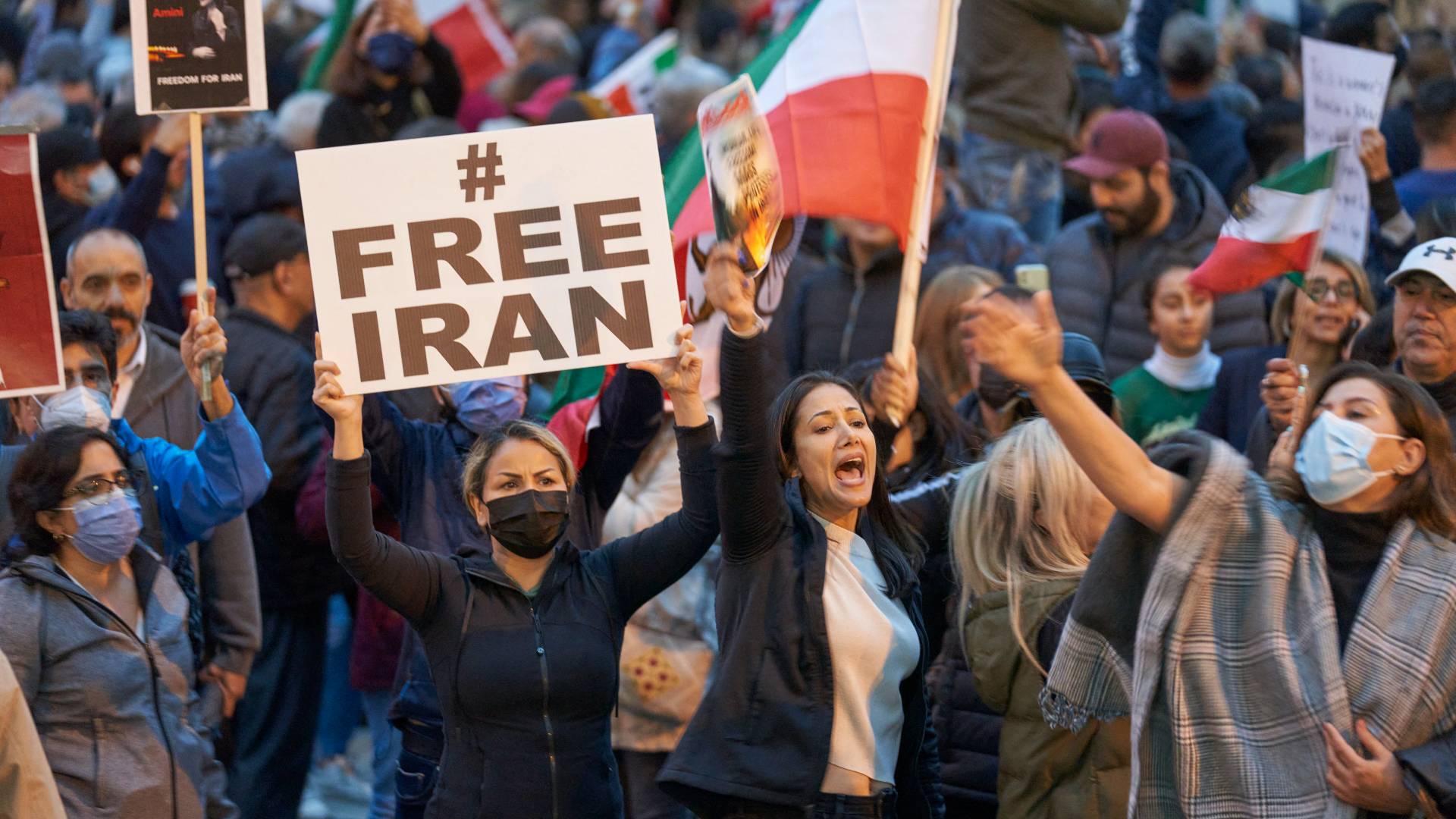
Reality: Repeated waves of protests since 2017, culminating in the 2022 "Zen, Zandegi, Azadi" movement, have led to widespread repression and arrest campaigns, yet social pressures persist. Human rights organizations document instances of abuse, executions, and restrictions on freedom of expression. Continued repression undermines the legitimacy of some governing institutions and increases the risk of local instability.
Water and environmental crisis
Reality: Iran is suffering from severe drought and deteriorating groundwater and dam resources, prompting the president in October 2025 to discuss the possibility of moving the capital due to the water crisis and land subsidence in Tehran. The water crisis directly impacts agriculture, food security, and internal migration—all of which could trigger social and political pressures.
demographic shifts
Reality: The fertility rate has fallen to low levels (data and 2025 indicate a significant decline) putting Iran on the path to a long-term "demographic gap" (an aging population and a shrinking labor force in the future). This calls for social and economic policies to manage structural change.
Corruption and institutional dominance
Reality: The growing influence of paramilitary and economic entities (such as the Revolutionary Guard and its economic projects) creates competition with the private sector and contributes to corrupt and monopolistic behavior that impacts the effectiveness of public policies and the reputation of governance. This reduces the government's ability to efficiently address crises.
2. Security and regional challenges
Nuclear program and international sanctions
Reality: The nuclear issue remains a central point of friction; Iran's escalating nuclear activity and technical measures have led to international moves to re-impose UN sanctions (August–September 2025) and to peak tensions between Tehran and the IAEA; any escalation raises the risk of isolation, military confrontation, or harsher economic measures.
The axis of resistance and regional interventions
Reality: Tehran's support for factions and movements in Iraq, Lebanon, Syria, and Yemen gives it strategic influence but exposes it to costly regional and international responses. Operations through proxies lead to recurring clashes and increase the likelihood of a slide into broader confrontations.
Internal security and ethnic rebellions
Reality: The risk of explosions/unrest in provinces such as Khuzestan, and minority issues (Arabs, Azeris, Kurds) represent a pressure factor on internal stability, and may be exploited in regional or internal political conflicts.
External and international challenges
Relations with China, Russia and the West
Reality: Tehran has adopted mitigation strategies by deepening ties with Beijing and Moscow (long-term economic and strategic agreements), but reliance on these powers has limits: Russia and China may retreat in the event of a major military escalation, and their relations do not guarantee a complete lifting of Western sanctions. In 2025, signs of divergence emerged in the positions of Russia and China during regional crises.
A crack in the role of mediation and regional balance
Reality: Diplomatic attempts (such as a settlement with Saudi Arabia in 2023) have provided diplomatic momentum, but they remain fragile in the face of security issues such as the nuclear program and mutual attacks. Continued tensions increase the cost of diplomatic re-engagement.
Future scenarios (prospects and possibilities)
(Return & Manage) Scenario (A) Engagement and Restricted Diplomacy
Summary: Limited negotiation leading to partial sanctions relief in exchange for verifiable limits on enrichment levels and oversight.
Success indicators: Reinstatement of IAEA inspection mechanisms, trade agreements with Asian partners, relative stability in the exchange rate.
Likelihood: Medium but depends on the parties' ability to exchange collateral.
Scenario B: Escalation and Squeeze
Summary: Tougher sanctions (snapback/bilateral measures) with a freeze on nuclear cooperation and increased isolation, which may be accompanied by a deep economic downturn and social unrest.
Indicators of success/failure: a significant decline in oil exports, a falling local currency, rising unemployment, and protests.
Likelihood: High if the nuclear issue escalates or regional attacks/responses continue.
Incremental Reform Scenario C
Summary: Limited internal changes (economic reforms, some cultural openings), leading to slow improvements in living standards while maintaining strict political restrictions.
Indicators of success: specific legal and economic reforms, partial normalization of regional relations, gradual easing of tensions.
Likelihood: Less than scenarios A and B because it requires internal acceptance and institutional power balances.
Iran faces a crossroads : either reach a diplomatic formula that minimizes the economic and political costs, or continue a nuclear and diplomatic escalation that leads to greater isolation and a deepening economic and social crisis. Internally, environmental, demographic, and economic crises pose long-term threats to the regime's legitimacy and the well-being of the population; while Iran's regional role and nuclear program largely determine its foreign policy options.
Iranian policy oscillates between revolutionary ideology and political pragmatism, as Tehran seeks to consolidate its regional influence while maintaining the stability of its domestic regime. Iran's political future depends on its ability to balance its revolutionary commitments with its
economic and political pressures.
🧭 General Summary
The Iranian issue is one of the most complex in the Middle East, as Iranian policy combines the religious ideology established by the "Guardianship of the Jurist" system with the national interests that Tehran seeks to achieve in its regional and international spheres.
Since the Islamic Revolution in 1979, Iran has set a model that contrasts with traditional systems of government in the region, relying on a political structure that combines republican institutions with supreme religious oversight represented by the Supreme Leader. This model has resulted in a unique interaction between reformist and conservative movements vying for power within defined constitutional frameworks.
Externally, Iran has adopted a policy aimed at expanding its regional influence, based on a rhetoric of "resistance" against Western hegemony and support for allied movements in the region, such as Hezbollah in Lebanon and the Houthis in Yemen. In turn, this approach has strained its relations with most Gulf states, particularly Saudi Arabia, and brought it into direct conflict with the United States and Israel.
The Iranian nuclear program has been at the core of the conflict between Iran and the West. Tehran sought to develop its nuclear capabilities under the banner of "scientific independence," while Western powers viewed it as a threat to international security. This issue has witnessed various stages of negotiations and withdrawals, most notably the 2015 agreement and Washington's withdrawal from it in 2018, which reimposed sanctions and profoundly impacted the Iranian economy.
🧩 The final conclusion
By analyzing Iranian domestic and foreign policy, it becomes clear that Iran represents a political state that combines ideology and pragmatism . On the one hand, it adheres to the principles of the Islamic Revolution, while on the other, it seeks to secure its strategic interests through negotiation and political maneuvering.
Today, Iran faces internal challenges , including economic pressures, social protests, and declining public confidence, along with external challenges related to its international isolation and its conflict with major regional powers. Despite this, it still possesses the elements of survival and influence, thanks to its military capabilities, geographical location, and network of regional alliances.
In light of these facts, it can be said that Iran's political future will depend on its ability to strike a balance between internal reform and external openness , and between maintaining its revolutionary discourse and adapting to the changing international order.
If Tehran can rebuild trust with the international community and ease regional tensions, it could open new horizons for economic and political integration in the region and the world.